When the Philippian jailer asked Paul and Silas what he needed to do to be saved, the answer was direct: believe in the Lord Jesus (). That same night he and his household were baptized (). The pattern throughout Acts is consistent: the gospel is proclaimed, people believe and are baptized, lives change. But across the history of the church, on both sides of that simple message, things get added or removed that distort it into something unrecognizable. Paul spent a significant portion of his letters protecting the gospel from exactly these distortions, and understanding them matters as much now as it did in the first century.
The First Distortion: Adding to What God Provided
is among the most striking passages in Paul’s letters. He says that if anyone, even an angel from heaven, preaches a gospel different from the one he preached, let him be accursed. He says it twice. The context was circumcision: certain teachers were telling Gentile converts that faith in Jesus wasn’t sufficient without also keeping requirements of the Mosaic law. records the argument directly: “Unless you are circumcised according to the custom of Moses, you cannot be saved.” Paul’s response was categorical. Adding a human requirement to what God has already provided insults the sufficiency of what Christ accomplished. The specifics change across time and culture, but the structure of this error stays the same. When human traditions, cultural expectations, or denominational identity get elevated to the level of what God requires, the addition has become the problem.
The Second Distortion: Removing the Call to Obedience
The opposite error is equally serious. Jude described certain people who perverted the grace of God into a license for doing whatever they wanted. Using grace to justify continued sin is not a new idea, and it is not a misunderstanding that arises only from carelessness. Paul anticipated it and addressed it sharply, asking whether believers should continue in sin so that grace might increase, and answering with an emphatic no. Grace is not an open subscription that requires nothing from the recipient. The gospel calls people out of sin and into a transformed life, and those who hold the message are responsible to say so, even when it isn’t what people want to hear. Paul warned Timothy that the time would come when people would accumulate teachers who told them what they wanted rather than what they needed (). That tendency did not wait long to appear, and it has not gone away.
The Third Distortion: Religious Achievement
is Paul’s most personal account of this error. He lists his credentials in full: circumcised on the eighth day, of the tribe of Benjamin, a Hebrew of Hebrews, a Pharisee, blameless under the law. If anyone could stand before God on the basis of religious achievement and history, Paul had the strongest possible case. His conclusion is that he counted all of it as rubbish for the sake of knowing Christ, seeking not his own righteousness from the law but the righteousness that comes through faith in Christ (). follows from this: there is no condemnation for those who are in Christ Jesus. Standing before God depends on whose we are, not on what we have accumulated or performed. This cuts against both the person who is certain their long record of faithful religious observance has put them in good standing, and the person who measures others by the level of their visible religious activity.
The Fourth Distortion: Human Philosophy
Jesus was not primarily a wise teacher with a philosophy for living a better life. When Paul stood in Athens and engaged the Epicurean and Stoic philosophers, he was not offering one more competing system of thought. He was announcing a fixed historical event with a fixed consequence: God had appointed a day in which he would judge the world in righteousness, “and of this he has given assurance to all by raising him from the dead” (). The resurrection is not a symbol or a metaphor for renewal. It is the center of the entire message. Following Jesus does not guarantee a comfortable or successful life in the present. Nearly every apostle was killed for proclaiming it. What the gospel offers is freedom from slavery to sin, forgiveness through Christ’s death, and the hope of sharing in his resurrection into a life that does not end. It answers what no human philosophy can, because it is not advice about how to live. It is news about what God has done.
What the Gospel Actually Is
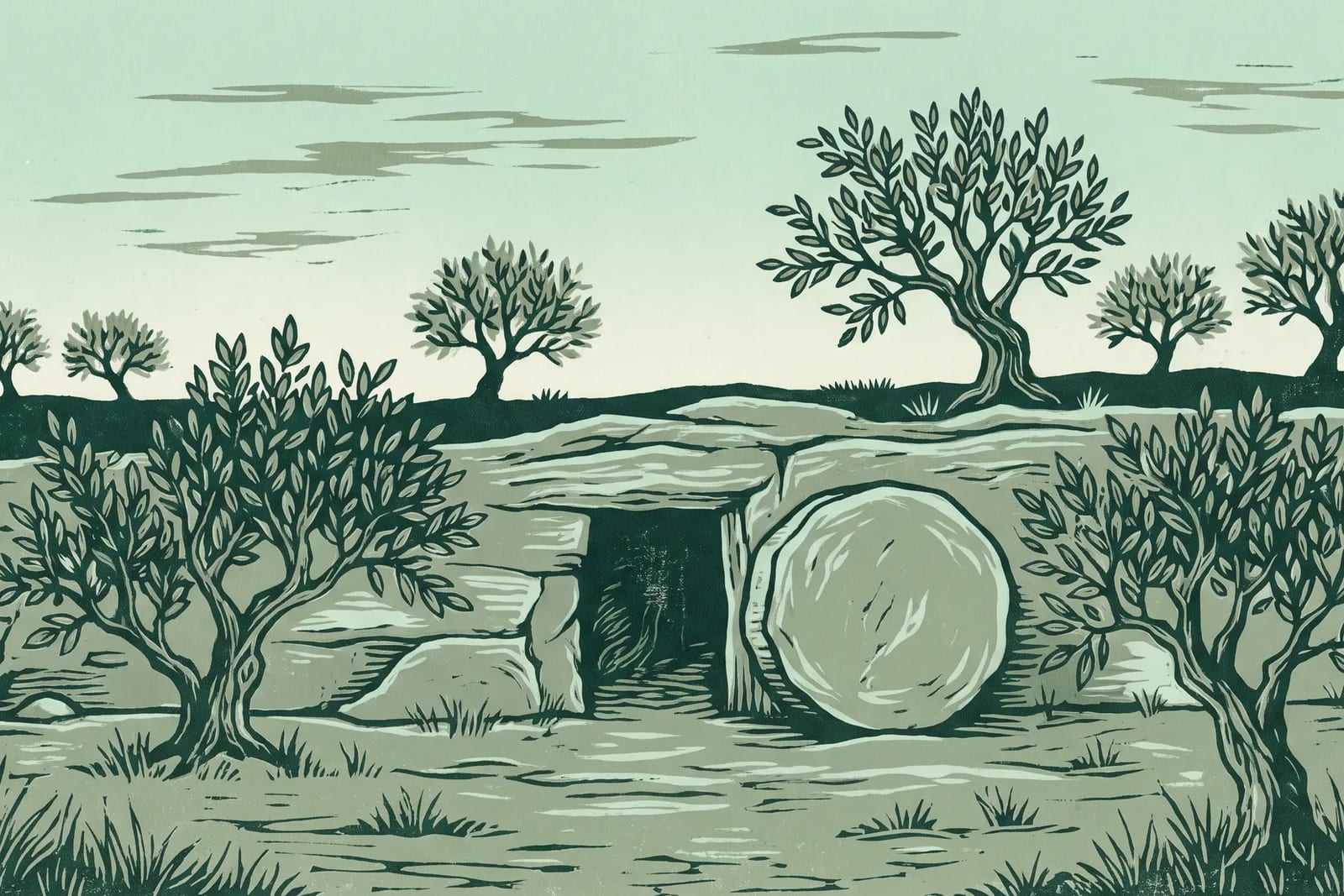
Paul’s summary in is the center of everything: Christ died for our sins in accordance with the scriptures, he was buried, and he was raised on the third day in accordance with the scriptures. Died, buried, raised. The death that paid for sin. The burial that confirmed the death was real. The resurrection that confirmed Jesus was who he said he was and that the penalty had been fully settled. Those who believe this, who repent and are baptized into Christ (), receive forgiveness and the promise of sharing in his resurrection. No additions, no subtractions, no substitutions for what God has said. Just the truth of what happened and what it means for anyone willing to receive it.